Puppy Profiling & Temperament Testing
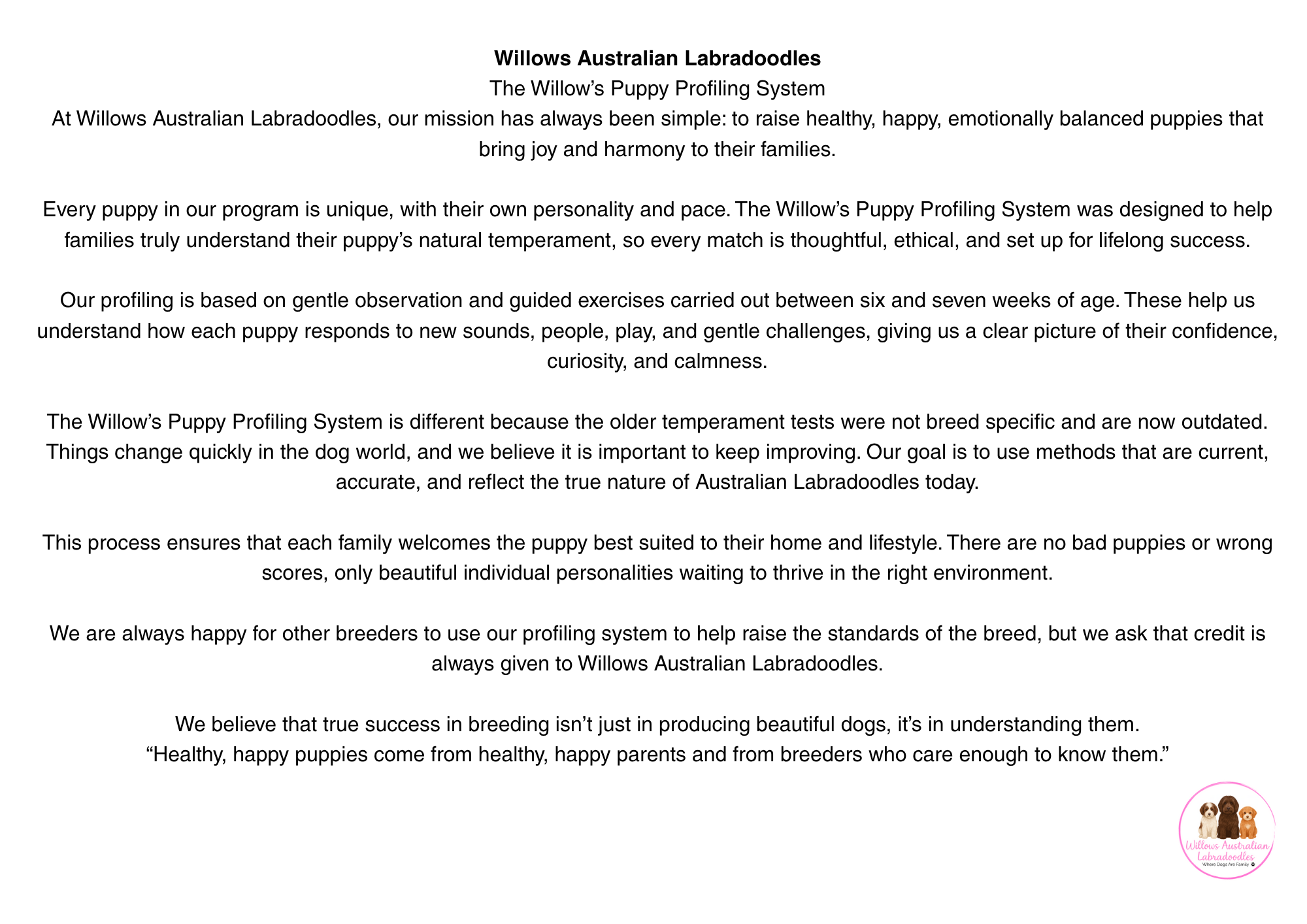
At Willows Australian Labradoodles, we’ve created our own way of understanding each puppy’s personality. A lot of the old-style puppy testing still used today was designed over twenty years ago, and we felt it no longer reflects the world we live in or the families who bring our puppies home.
Our puppy profiling looks at how each puppy reacts to new sights and sounds, how confident they are in new places, how they play, and how easily they recover from something unexpected. Each puppy is then given a score between 10 and 100.
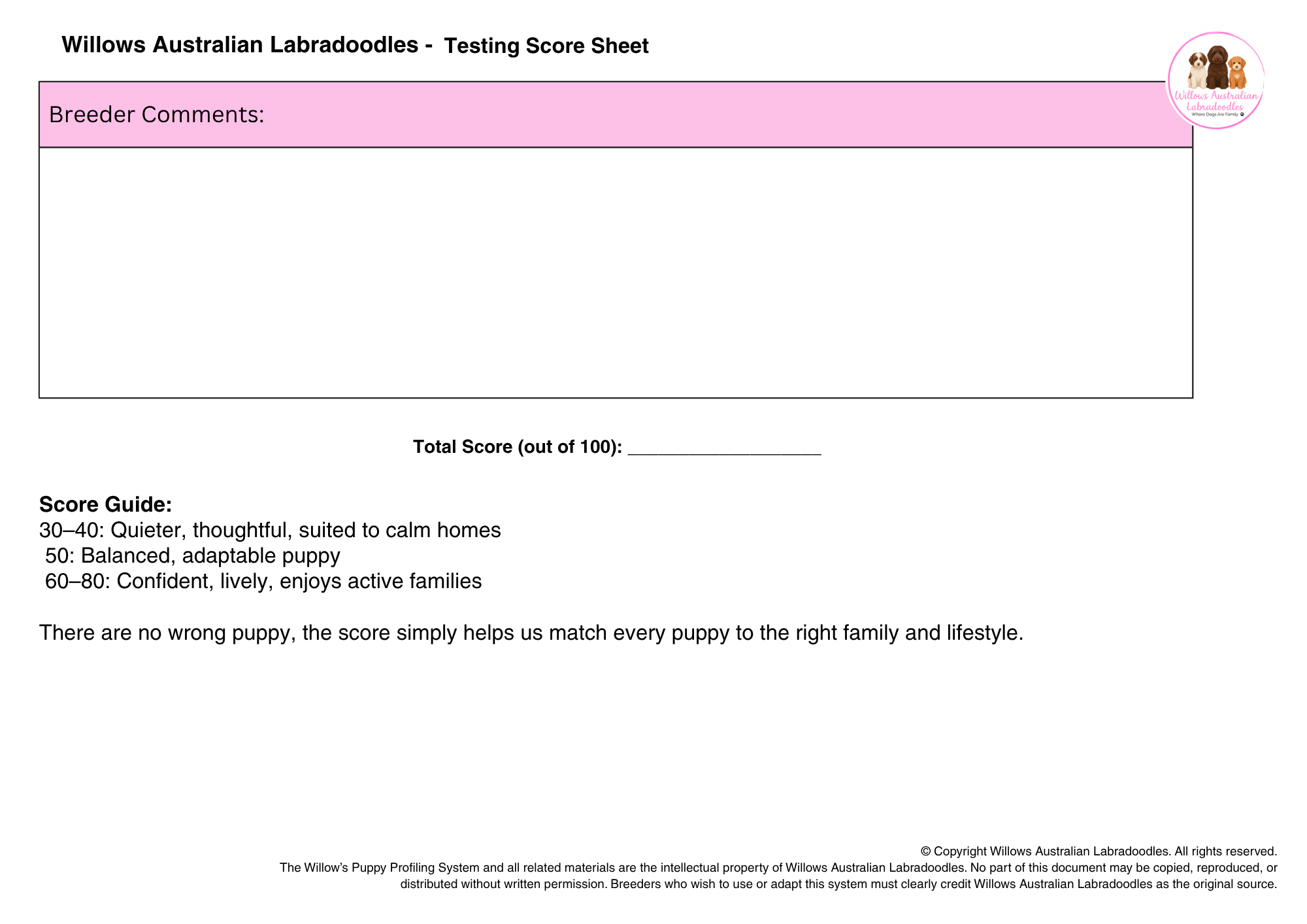
A score of 50 is our perfect balance, the kind of puppy that can fit happily into almost any home.
Puppies that score 30 or 40 are quieter and more thoughtful. They’re best suited to calm homes, perhaps with older owners, retired couples, or families whose children have grown up.
Puppies that score 50 and above are confident and outgoing. Those around 60, 70, or even 80 are full of energy, enthusiasm, and love for life. They are happy, busy puppies who enjoy noise, activity, and the lively rhythm of family life. These puppies thrive in homes where there’s plenty going on and lots of time for play and training.
There is no wrong puppy and no bad score. The score simply gives us a snapshot of each puppy’s natural character, their core. It helps us match every puppy to the right family, making sure both family and puppy enjoy the best possible start together.
Genetics also play a big part in each score. Just like people, every puppy is born with their own natural temperament and instincts. We can guide and shape them, but their genetics give us the foundation. That’s why we take such care in choosing the parents of each litter.
One day, we hope that everyone will be talking about their puppy’s profile, what their number is and what it means. The more people understand and talk about it, the more thoughtful puppy buying will become. All puppies are cute and lovely, but choosing based on temperament and genetics helps create harmony and lifelong happiness for both puppy and family. At Willows, we want to lead that change.


Understanding the Word “Calm”
One of the most common things we hear on puppy visit days is, “We’d like the calm puppy.” It sounds lovely, but most people don’t realise what that really means. A calm puppy isn’t automatically the easiest puppy. In fact, for a busy family with young children, a very calm or quiet puppy can find that lifestyle overwhelming.
Every puppy will have calm moments, and every puppy will also go through normal puppy stages like biting, jumping, and learning boundaries. That’s completely natural. The difference is in how each puppy handles change, noise, and new experiences.
A quieter, lower-scoring puppy often needs a peaceful home where life moves at a gentler pace. A busier family with young children is usually better suited to a confident, higher-scoring puppy that enjoys activity and recovers quickly from everyday noise.
Our goal is never to label puppies as “good” or “bad,” but to help families understand what fits their home best. Matching the right puppy to the right family is what makes life easier for everyone — and it’s what keeps both puppy and family happy in the long run.
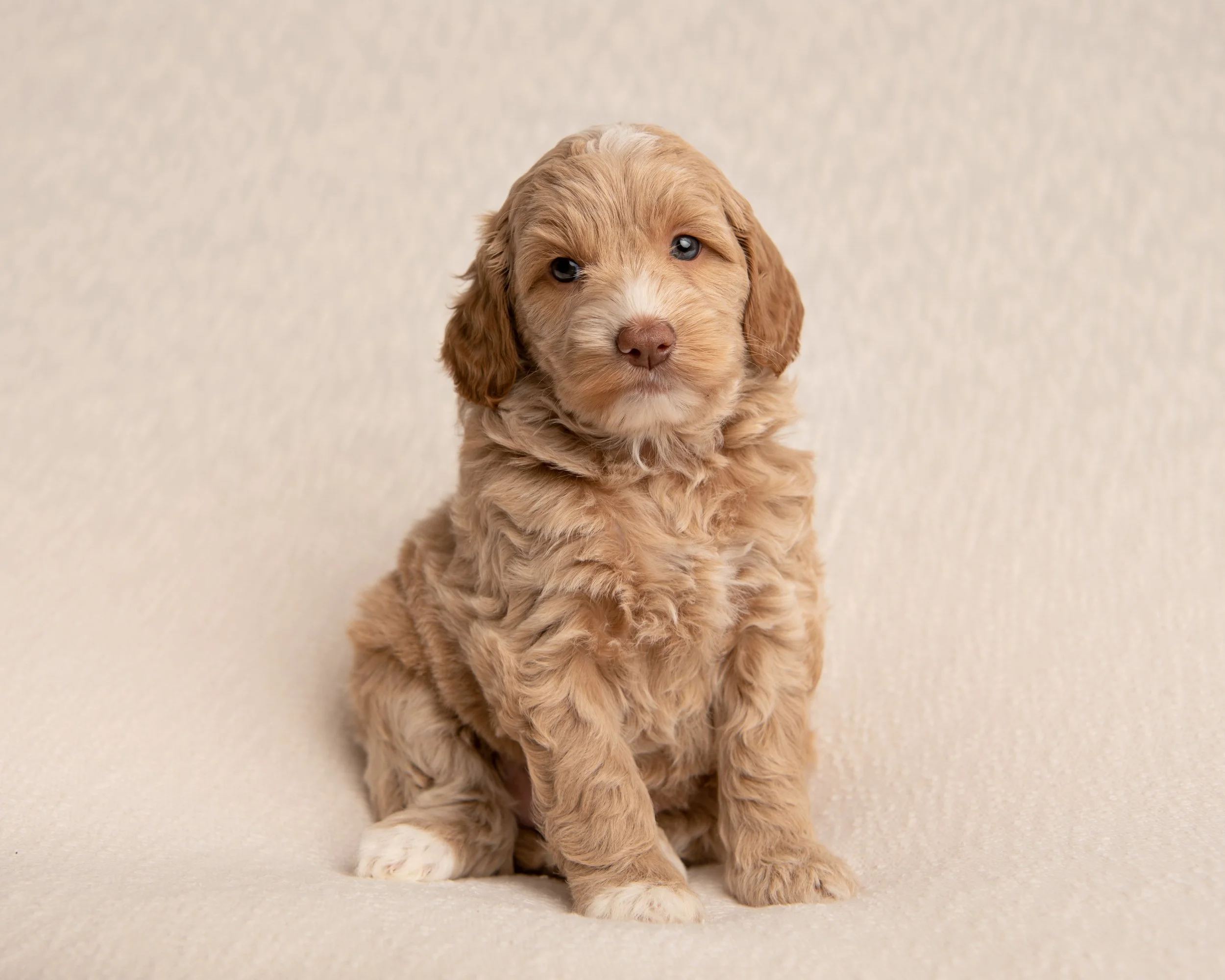
The 10 Willow’s Puppy Profiling Tests
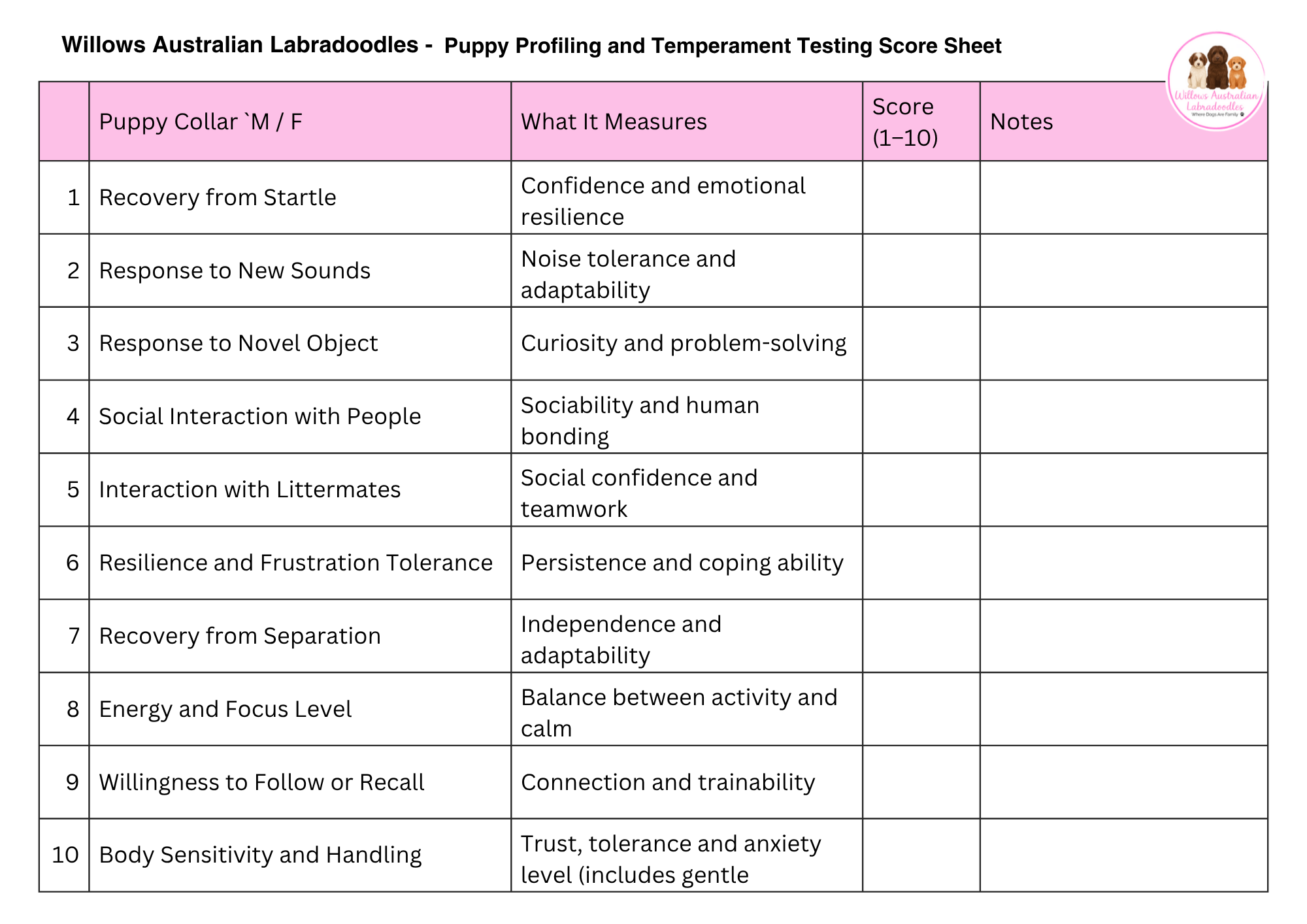
1. Recovery from Startle
How quickly does the puppy recover after a sudden sound or movement?
Measures: confidence and emotional resilience.
2. Response to New Sounds
How does the puppy react to everyday noises (vacuum, TV, clapping)?
Measures: noise tolerance and adaptability.
3. Response to Novel Object
When introduced to a new toy or object, does the puppy explore or hang back?
Measures: curiosity and problem-solving.
4. Social Interaction with People
Does the puppy approach willingly, enjoy touch, and seek engagement?
Measures: sociability and human bonding.
5. Interaction with Littermates
Does the puppy share toys, play gently, or show dominant or submissive behaviour?
Measures: social confidence and teamwork.

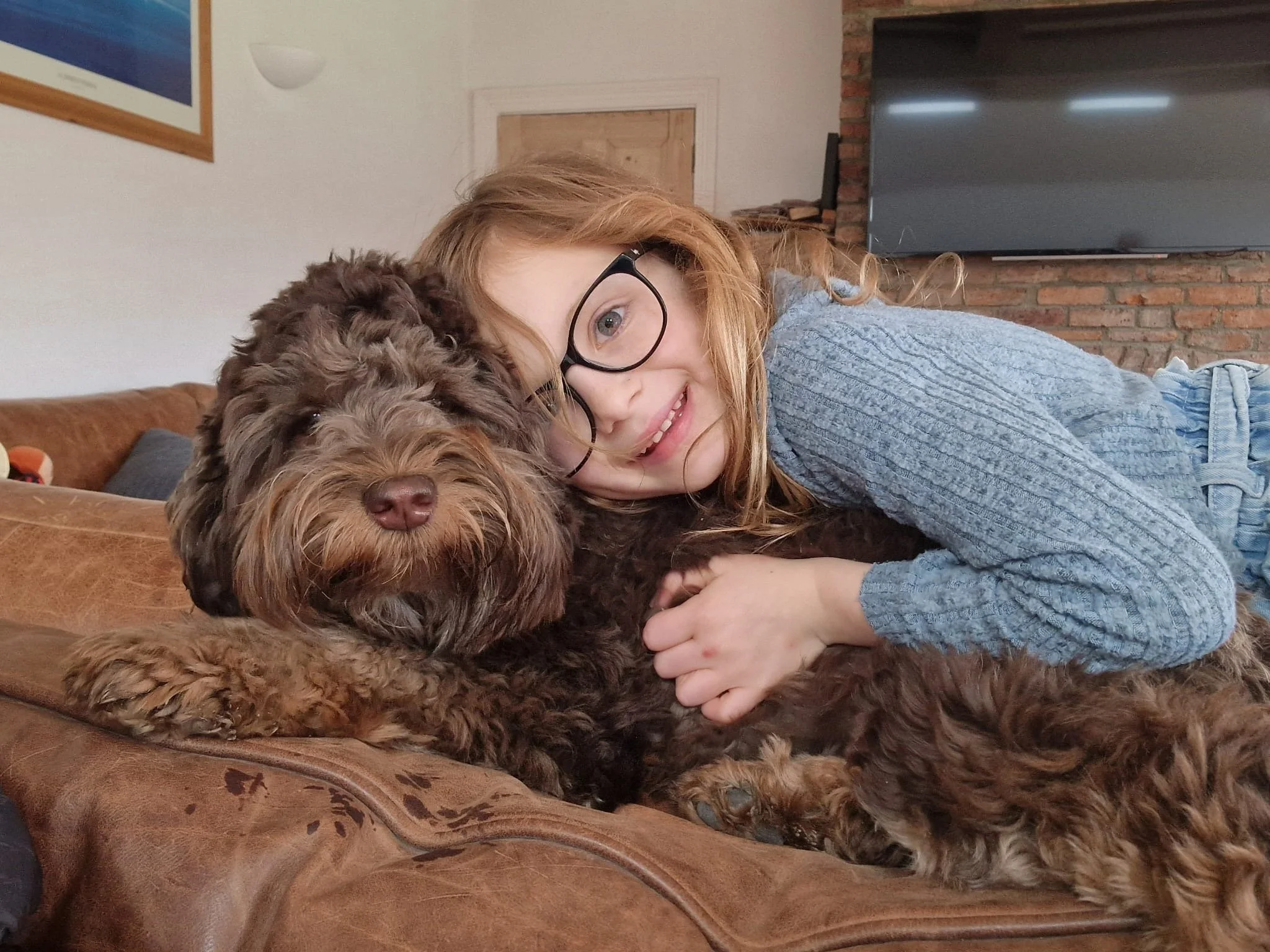
Scoring Guide
1–3: Shy, cautious, or easily overwhelmed
4–6: Balanced, thoughtful, steady
7–10: Confident, bold, adaptable
The goal isn’t a “perfect” 100, it’s to understand who each puppy truly is. The closer the puppy sits to 50 overall, the more balanced they tend to be. Lower-scoring puppies shine in quiet homes; higher-scoring puppies thrive in active families.
Why It Works
This system combines early neurological and social insights with real-world understanding. It helps families choose based on temperament and genetics, not impulse or appearance. Every puppy has its place, this simply helps us find where they’ll be happiest.

6. Resilience and Frustration Tolerance
When faced with a small challenge (e.g., blocked access to a toy), does the puppy keep trying or give up?
Measures: persistence and coping ability.
7. Recovery from Separation
When taken briefly away from mum or littermates, does the puppy settle or panic?
Measures: independence and adaptability.
8. Energy and Focus Level
Is the puppy constantly on the go, or balanced between activity and calm?
Measures: arousal regulation and energy management.
9. Willingness to Follow or Recall
Does the puppy respond when called or encouraged to follow a person?
Measures: connection, attentiveness, and potential trainability.
10. Body Sensitivity and Handling
How does the puppy react to being gently examined, touched, or having paws held?
Measures: tolerance, trust, and grooming comfort.